
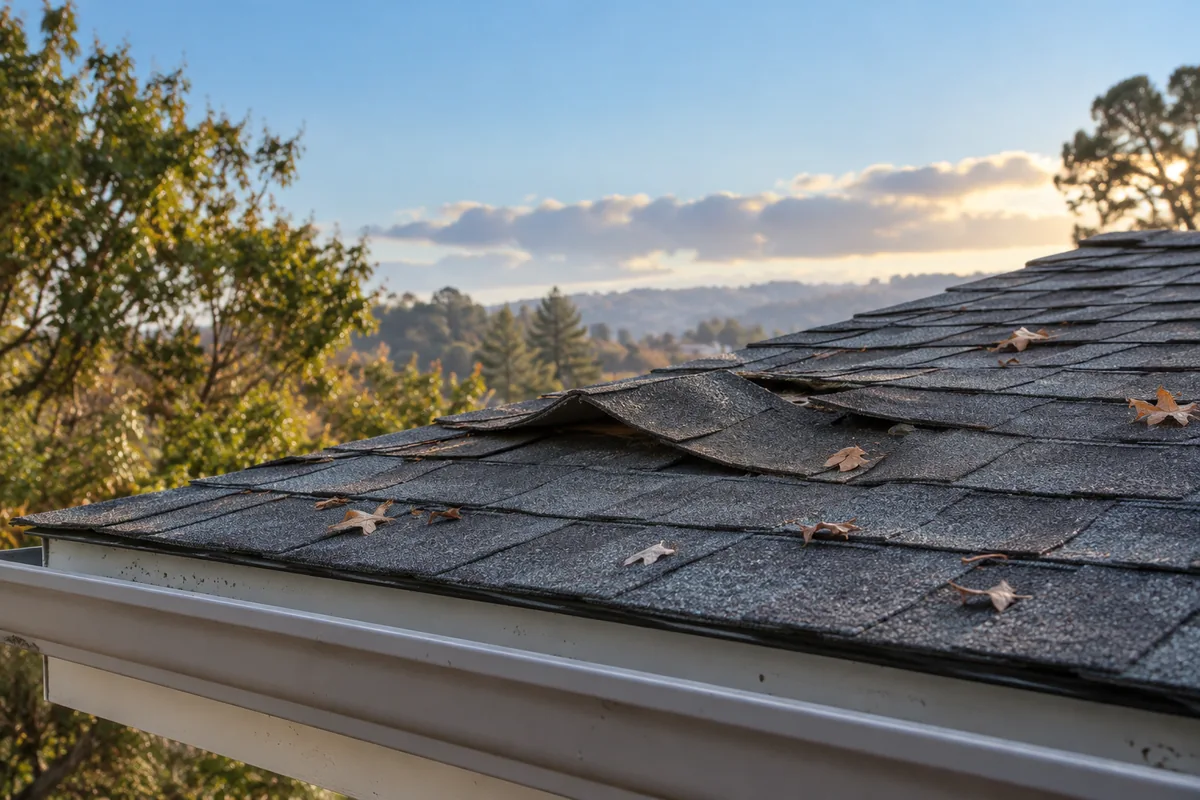
Start with safe observations
Look from the ground or inside the home. Describe shingles that appear displaced, debris where it was not before, new ceiling marks or active dripping. Stay away from downed wires, damaged structures and roof access.
If there is immediate danger from electrical equipment, structural instability or another emergency, seek the appropriate emergency assistance first. A roofing referral call is not an emergency-response service.
Separate the visible damage from the repair decision
The change you noticed
Record when the roof concern first became visible and what the weather was doing. Keep original photographs and any earlier images of the same area.
The current condition
Tell the provider whether water is still entering and whether you can safely remain in the affected room. Avoid touching a sagging or damaged ceiling.
The proposed scope
Ask which findings support temporary protection, localized repair or further investigation. Those are different decisions and should be explained separately.
Temporary protection and permanent repair
A provider may discuss a temporary measure if the roof cannot be repaired immediately. Ask what it is intended to protect, what limitations apply and what follow-up is needed. Roof tarping is a temporary-protection conversation, not a promise that the underlying failure is resolved.
Weather, roof access, material condition and provider availability can affect the plan. Do not interpret an open phone line as a guaranteed dispatch time.
If you are considering an insurance claim
Keep factual records of the damage and call your insurer to ask what the policy and claim process require. Do not describe the cause as established until it has been assessed. A roofing provider’s scope and the insurer’s coverage decision are separate matters.
Our before-you-call checklist helps organize photos, timing and earlier work documents. For general roof-damage observations, see GAF’s storm-damage resources.
Call with your Cupertino property details
Give the actual address, ZIP 95014, visible symptoms and whether you need to discuss temporary protection. Cupertino RoofLeak connects callers with independent providers. Each provider determines whether they can assess the requested work and when.
Questions homeowners ask
Clear answers before the callDoes a leak after a storm prove storm damage?
No. The timing is relevant, but an assessment is needed to distinguish a new failure from an existing condition or another source.
Can I photograph the damage?
Only from a safe indoor or ground-level location. Do not climb onto the roof or approach wires, unstable materials or damaged trees.
Can I ask about temporary protection?
Yes. Explain the active condition and ask the provider whether a temporary measure is suitable and available.
Will insurance pay for storm-related roofing work?
Your insurer decides coverage under your policy and the assessed cause. This website does not determine coverage or promise a claim outcome.
Is roof repair available immediately?
Availability varies with location, weather, access and provider capacity. Ask directly; no response time is guaranteed.
Who decides whether repair or replacement is needed?
The independent roofing provider should explain the assessed condition and proposed scope. Ask for the reasoning and written details before hiring.