
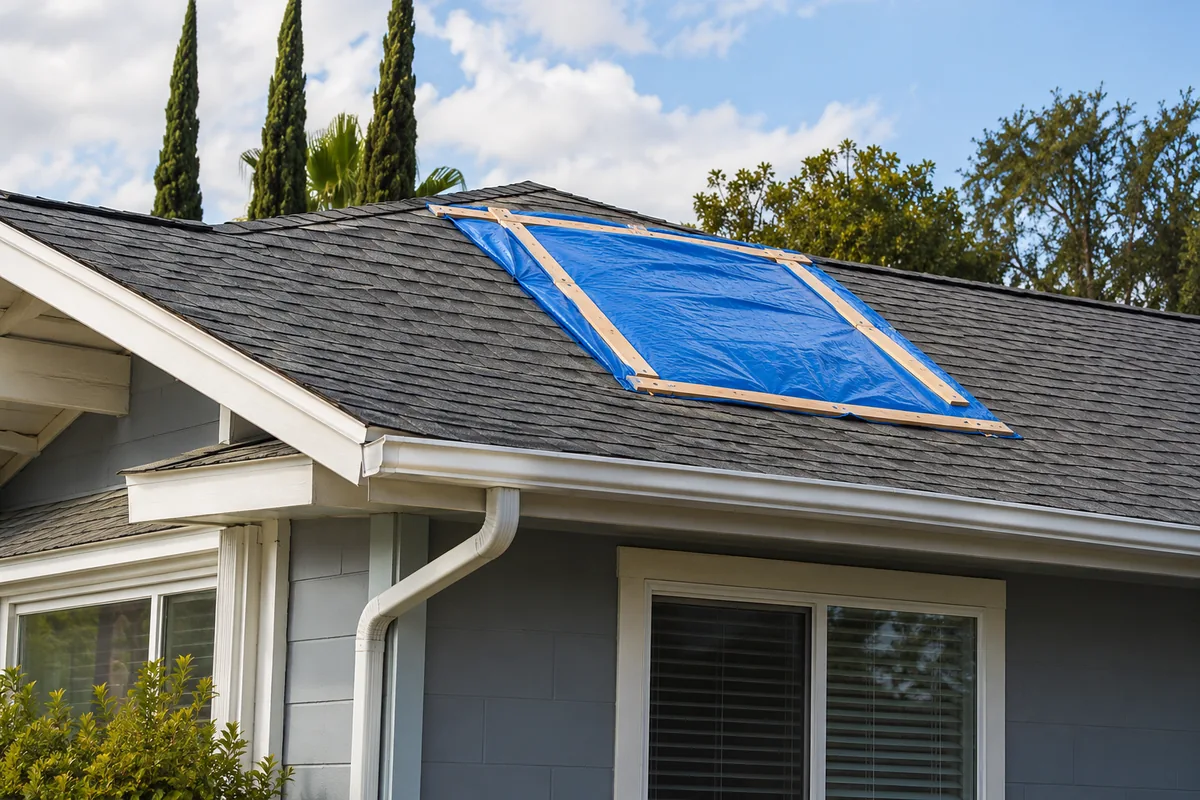
Explain why temporary protection is being considered
Tell the provider whether there is an opening, a displaced roof covering or active water entry. Share only what you can safely observe. If a previous provider recommended temporary protection, keep that recommendation available for the next conversation.
Do not attempt to install a tarp from a wet roof, ladder or damaged structure. The access method and suitability of any covering should be considered by someone equipped for the conditions.
Three questions to ask first
Is this an appropriate temporary measure?
A roof covering, roof shape, weather conditions and the extent of the damage can all affect the decision. Ask the provider what the measure is intended to achieve.
What are the limitations?
Ask what the covering will and will not protect, how its condition should be monitored from a safe position and who to contact if water continues entering.
What comes next?
Discuss the assessment or permanent repair that follows. Make sure a temporary step does not become an assumed finished repair.
Keep the work scope clear
Ask for the temporary work and any later repair to be described distinctly. Confirm who is responsible for follow-up, removal and any additional work that is not included. Pricing and scheduling are determined by the independent provider.
Where wind or storm damage is suspected, retain photographs, dates and earlier repair documents. If an insurer is involved, ask it what documentation is required before making assumptions about reimbursement.
If the leak keeps returning
A covering or patch can leave the larger cause unresolved. Record when water reappears and contact the provider who performed the work. Our guide to a roof leak that returns after patching helps you organize the follow-up questions.
Cupertino RoofLeak offers a connection service. We do not install tarps, inspect roofs or guarantee a provider’s work, availability or attendance time.
Ask about availability before making plans
Call with the Cupertino address, roof concern and current water-entry situation. A provider must confirm whether the requested scope fits and whether an assessment or temporary protection can be arranged. Calling does not by itself book work.
Questions homeowners ask
Clear answers before the callIs roof tarping a permanent repair?
No. It is a temporary-protection measure when suitable. Ask the provider what permanent assessment or repair should follow.
Can anyone safely tarp a roof?
Roof access involves fall, surface and structural risks. Do not attempt it yourself based on a website description; ask an appropriately equipped provider about the conditions.
How long can a tarp remain on the roof?
There is no single duration suitable for every roof, material and weather exposure. Ask the installing provider about limits, follow-up and the permanent plan.
Does calling guarantee emergency attendance?
No. Availability depends on the location, requested work, weather and provider capacity. Ask what can actually be arranged.
What should I ask about the scope?
Ask what area will be protected, how limitations are explained, who handles follow-up and removal, and which later repairs are separate.
Can I call about ongoing water entry?
Yes, describe the active condition and property address. Immediate electrical or structural danger requires appropriate emergency assistance rather than relying on a roofing referral.