
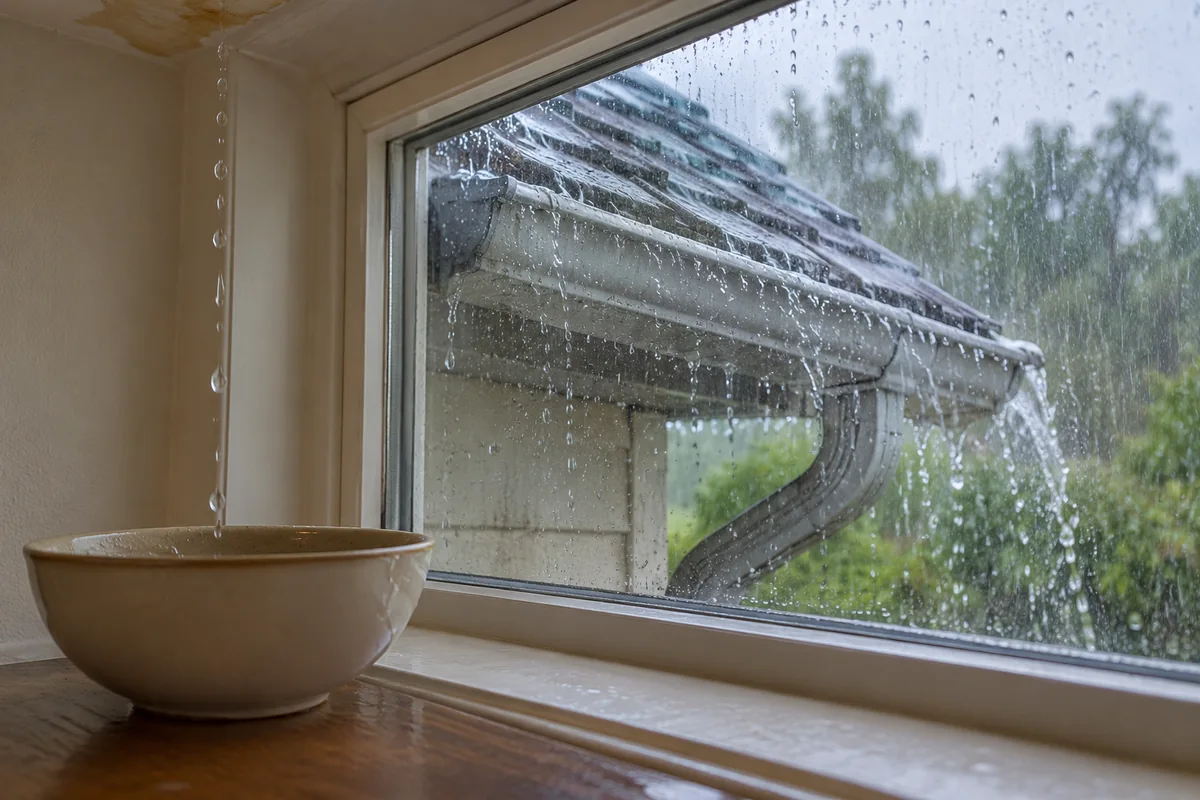
Why heavier rain can reveal a leak
Heavier rain can expose a weakness that a short shower does not make noticeable. Possible entry points include damaged roofing, deteriorated flashing or a vent-pipe detail. Wind-driven rain and backed-up drainage can also matter. The timing narrows the questions; it does not identify which component has failed.
GAF’s roof-leak guide describes common entry points and visible signs. Use it to understand the terms a provider may discuss, rather than to choose a repair yourself.
Write down the pattern while it is fresh
Start with the date and the conditions you actually observed. Was the rain brief or prolonged? Did wind accompany it? Did the drip begin during the heaviest rainfall or later? You do not need a weather station or a technical explanation; a simple sequence helps.
A note such as “the bedroom stain became wet near the end of a long rain, then stopped overnight” gives the provider something specific to investigate. “It always leaks” can leave useful distinctions unexplained.
Separate three parts of the story
What happened outside
Describe rain, wind and any visible debris without assuming which event caused the failure.
What happened inside
Record the room, position, approximate area and whether water dripped, stained or collected. Photograph from the floor if it is safe.
What happened before
Mention earlier patching, recent roof work or an older stain in the same place. Keep invoices and photographs together.
Why a rain pattern is a clue, not a diagnosis
Roof coverings, openings and transitions all manage water under different conditions. A provider may want to look at flashing details, the area around a skylight or the condition of the covering. The symptom alone does not choose between them.
Likewise, the interior mark may not sit directly beneath the entry point. Tell the provider what you can see and allow the assessment to trace the relationship. Our guide to a stain away from the roof leak explains how to record the location.
Questions that make the assessment more useful
- What conditions could explain this particular pattern?
- What roof areas or details will be assessed?
- Would the proposed work address a cause or only a visible symptom?
- What should I record if the issue occurs again?
- How will any uncertainty be explained in the written scope?
There is no need to choose a sealant, patch or replacement before the provider has explained the findings.
Keep the immediate response safe
Move belongings away from the affected area only if you can do so safely. Keep clear of wet electrical equipment and a sagging or unstable ceiling. Do not climb a wet roof or enter an unsafe attic to find the source.
If water is actively entering, explain that when you call and ask about temporary protection if appropriate. Immediate attendance is not guaranteed. Electrical or structural danger calls for appropriate emergency assistance.
Before the next rainy day
Keep your symptom notes, photographs and previous repair records in one place. Agree with the provider on how to report a recurrence and what the next assessment step would be. A quiet period after rain is useful to note, but it does not prove that a repair has resolved the problem.
For Cupertino service enquiries, call with the property address and the current condition. The provider confirms service fit, assessment arrangements and pricing directly.
Questions homeowners ask
Clear answers before the callDoes heavy-rain-only leaking mean the roof needs replacement?
No. The pattern is one piece of information. Ask the provider what the actual roof condition and assessed failure support.
Should I wait for another storm before calling?
You can call before the issue repeats. Explain the last observed event and ask what records or assessment would help.
Is wind direction worth mentioning?
Yes, if you noticed it. Describe the observation without treating it as proof of the leak source.
Can a roof leak continue after rain stops?
Record any delay or continued dripping and tell the provider. The timing is useful assessment information.
Can I inspect the roof during rain?
Do not climb onto a wet roof. Take safe indoor or ground-level observations and ask a suitable provider about access.
What should I do if water is entering now?
Avoid hazards, describe the active condition on the call and ask about availability. Seek appropriate emergency assistance if there is immediate danger.