
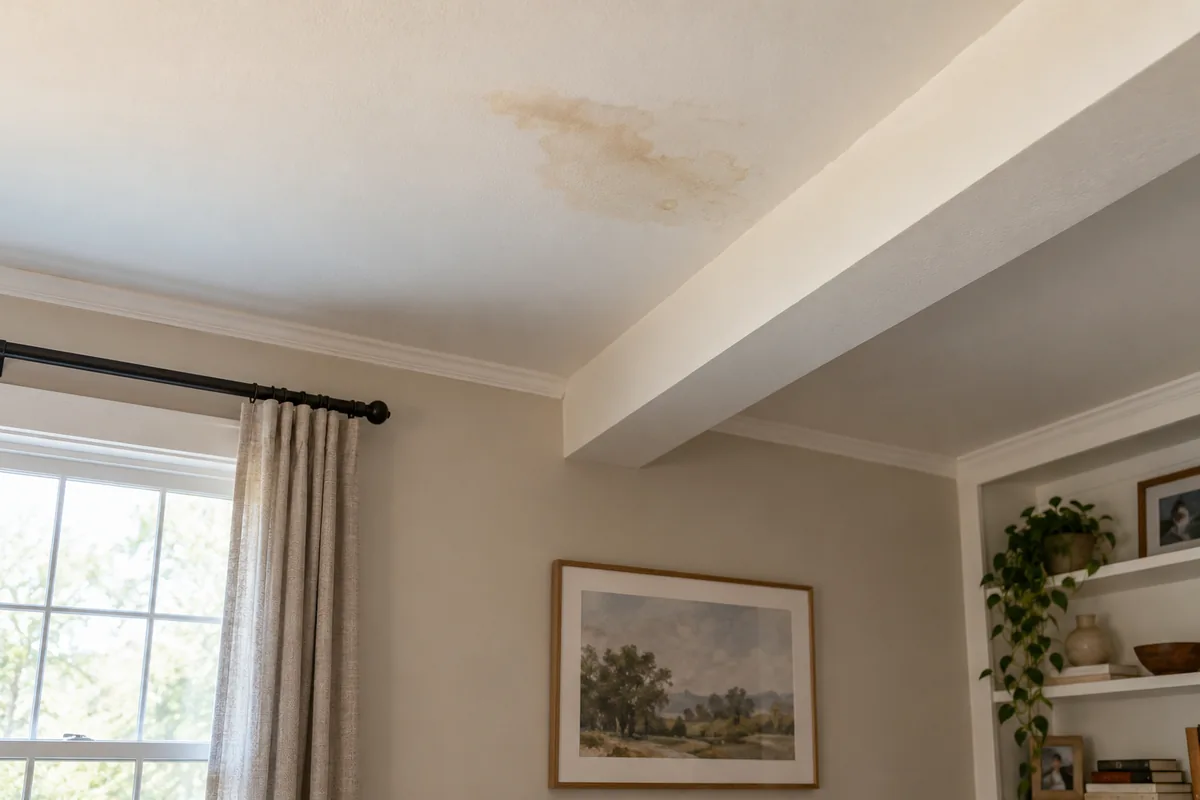
How water can appear away from its entry point
Water can travel along roof materials and framing before reaching a place where it becomes visible indoors. That is why a stain near the middle of a room does not prove the roof directly above it is the entry point. A vent, roof junction or other opening may be part of the investigation.
GAF notes this tracing difficulty in its vent-pipe leak explanation. Keep the interior location and the suspected outside feature as two separate observations.
Treat the stain as an observation
Mark the location in your notes: room, nearby wall, ceiling beam or roof opening. Add a dated photograph taken from the floor. If the mark appears to grow, compare the pictures instead of relying on memory.
The assessment needs to connect the indoor evidence with the roof condition. Water can follow parts of a building before becoming visible, and a ceiling mark can also have a source other than the roof. Tell the provider if an upstairs bathroom, pipe or other possible source is nearby.
Describe position in a way someone else can use
Inside the room
Explain which corner or wall the mark is closest to. A simple sketch can be more useful than an uncertain measurement.
Nearby features
Mention a skylight, chimney breast, vent or ceiling fixture. Do not touch a wet electrical fitting to investigate.
The shape over time
Distinguish an old dry ring from a newly wet patch or an active drip. Photograph changes safely and note whether they follow rain.
Questions to ask about the source
Ask what evidence connects the roof detail to the indoor mark. A provider should be able to explain the reasoning and any limits to the assessment. If the source remains uncertain, ask what further investigation is proposed.
Useful questions include whether the relevant roof junctions and flashing will be considered, whether a nearby skylight changes the scope and whether another trade may be needed. A photo can start the conversation; it is not a substitute for every assessment.
Why repainting is a separate decision
A fresh coat of paint changes the visible surface. It does not, on its own, establish that water entry has stopped or that affected materials are ready for finishing. Ask the appropriate provider what condition needs to be addressed before interior cosmetic work.
Keep before-and-after records if repairs are carried out. If the stain returns, those records help distinguish a continuing problem from a new mark in a different location.
When to keep clear of the area
A sagging ceiling, loose material or moisture near electrical equipment calls for caution. Avoid pressing, puncturing or standing beneath an unstable area. Seek appropriate emergency assistance if the situation poses immediate danger.
Stay on the ground for exterior observations. Do not use an article as permission to climb onto a roof or enter an unsafe attic.
Bring a short record to the call
Use the roof-leak call checklist to organize the address, timing, photos and previous work. If the mark follows heavier rain, our rain-pattern guide gives additional questions.
Cupertino RoofLeak helps callers seek independent providers. The provider assesses the concern, explains the proposed scope and confirms availability.
Questions homeowners ask
Clear answers before the callDoes a ceiling stain always mean a roof leak?
No. Roof entry is one possibility, but plumbing, condensation or another source may need consideration. Describe the timing and nearby features.
Should I photograph the stain?
Yes, if you can do so safely from the floor. Keep dated images that show location and changes.
Is a dry stain proof the problem is over?
Not by itself. Record when it was last wet and ask the provider what follow-up or assessment is suitable.
Should I paint over it first?
Ask about the source and material condition before treating the appearance. Cosmetic work does not confirm that water entry has stopped.
Can a nearby skylight be involved?
It may be relevant, but proximity alone does not diagnose the source. Describe the skylight and the mark’s position.
What if the ceiling is sagging?
Keep away from the affected area and seek appropriate help for the immediate hazard. Do not press or puncture an unstable ceiling.